This call is also available in Finnish.
Call for Doctoral Researchers!
Does your heart beat for science? Do you enjoy digging into data? Do you want to make invisible phenomena visible? If yes, we offer you the opportunity to apply for a doctoral researcher position within one of the projects described below. These projects are situated in the fields of dynamic personality, neuroscience, and developmental psychology. One doctoral researcher can be recruited for each project. The principal investigator (PI) and main supervisor is Docent Jallu Lindblom (Tampere University).
Research Projects
Project 1: Dynamic Personality
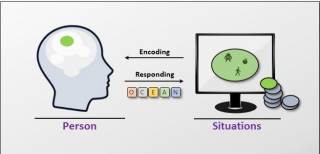
The project has developed a virtual simulation method for studying the interaction between personality and situations. The research addresses the key question of how and under which conditions personality (e.g., Big Five, attachment styles) translates into behavior. The theoretical background is related, among others, to situation research (see DIAMONDS) and cybernetic self-regulation (CB5T). The virtual simulation method is unique and extends traditional experience sampling methods (see Situation Characteristic-State Contingencies). The aim is to renew the conception of human behavior in psychology by emphasizing contextual, dynamic processes instead of static traits. The project is conducted in German-Belgian collaboration. https://projects.tuni.fi/game-based-assessment/
Project 2: fMRI, Social Relationships, and Emotions
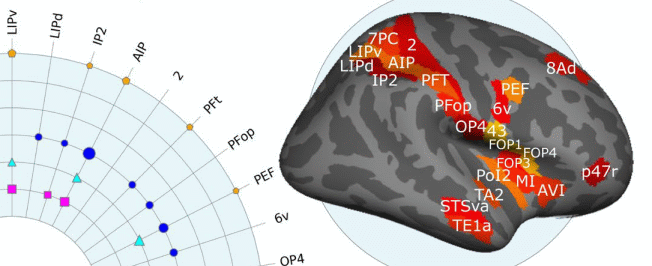
The Miracles of Development longitudinal study has followed nearly 800 families from pregnancy to the children’s adulthood. The fMRI subsample (n = 90) was collected in early adulthood of the participants. During scanning, tasks related to emotion regulation, social cognition, and ostracism have been conducted (see Ilomäki et al., 2022, 2025; Wikman et al., 2022). The doctoral research plan will be developed in collaboration with the research group. The research focuses on associations between interpersonal factors measured in the longitudinal data (e.g., peer and family relationships, attachment) and neural correlates of emotion regulation (e.g., task-related activation, functional connectivity). The project is conducted in collaboration between Tampere University and the University of Helsinki. https://projects.tuni.fi/kehi/
Project 3: Attachment and Relationship Processes
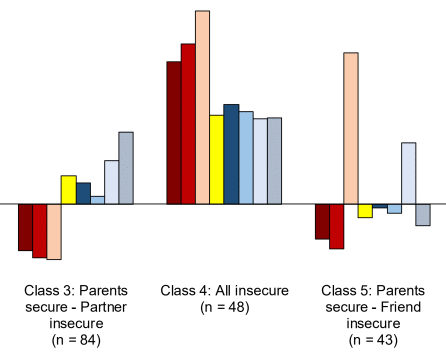
This project utilizes multiple longitudinal datasets. The research focuses on the organization of attachment styles (ECR-R; e.g., Flykt et al., 2021) in romantic relationships and in daily life (Ecological Momentary Assessment; see Tammilehto et al., 2025). Relationships are examined within a family context. This enables testing predictive effects on relationship quality and child development (e.g., self-regulation processes). The key question is whether dyadic attachment patterns and attachment states form attractor states (latent profiles) or whether attachment manifests dimensionally in these domains. As the project develops, collaborations and datasets will be specified further.
What We Offer
We offer an inspiring, expert, and well-networked research environment. Each doctoral project consists of three sub-studies, for which ongoing projects provide largely ready-made datasets. Currently, there is no direct funding for the doctoral position. Funding will be applied for from foundations with the support of an experienced research group. This approach has proven successful. Tampere University provides a doctoral study right and courses supporting doctoral work.
A funding application related to the dynamic personality project is currently under review. A positive funding decision would enable funding for the doctoral position.
Research profile of the principal investigator: https://www.researchgate.net/profile/Jallu-Lindblom
What We Expect from You
At the beginning of a doctoral project, you are not expected to master everything. Learning is part of the process through courses and supervision. However, we expect the following:
■ Ability for theoretical thinking. Genuine interest in scientific research and the project topic is essential. Understanding the foundations of psychological science is an advantage.
■ Strong statistical competence (e.g., multivariate methods) and willingness to further develop these skills. You are proficient in R (or equivalent software).
■ Good writing skills. The work requires extensive reading and writing of scientific texts. Fluent written English is an advantage.
■ For the fMRI project, studies in neuroscience and prior experience with brain research methods are considered an advantage. We also expect willingness and ability to program (e.g., R, Matlab, Python).
How to Apply
Send your application to the principal investigator (jallu.lindblom@tuni.fi) by Wednesday 22 April 2026. Include a free-form motivation letter. Indicate which project you are interested in and describe your background. Also include your CV, your Master’s thesis (PDF), and your transcript of records (including course grades). Selected applicants will be invited to an interview.
A Master’s degree (MSc in Psychology or field related to neurosciences) is not strictly required at the time of application, and it is possible to begin preparing doctoral work in the final phase of studies. Remote work and part-time arrangements can be negotiated on a case-by-case basis. Some on-site work in Tampere is expected; for the fMRI project, also in Helsinki.
The principal investigator is happy to discuss the projects and provide further details. Project websites contain additional information, but they do not yet reflect the specific planned doctoral components. Contact via email (see above) or by phone (+358 50 318 6143 / Jallu).
Jallu Lindblom
PhD, Docent, University Lecturer
Tampere University, Finland
Welfare Sciences (Psychology) / Faculty of Social Sciences
+358 50 318 6143